
Article
Call-Ups Without Drama: A Method That Survives Friday Night
Who plays, who does not, and how you say it: a simple process for closing the call-up without messages at eleven at night or parents at the changing-room door.
- #call-ups
- #match day
- #communication
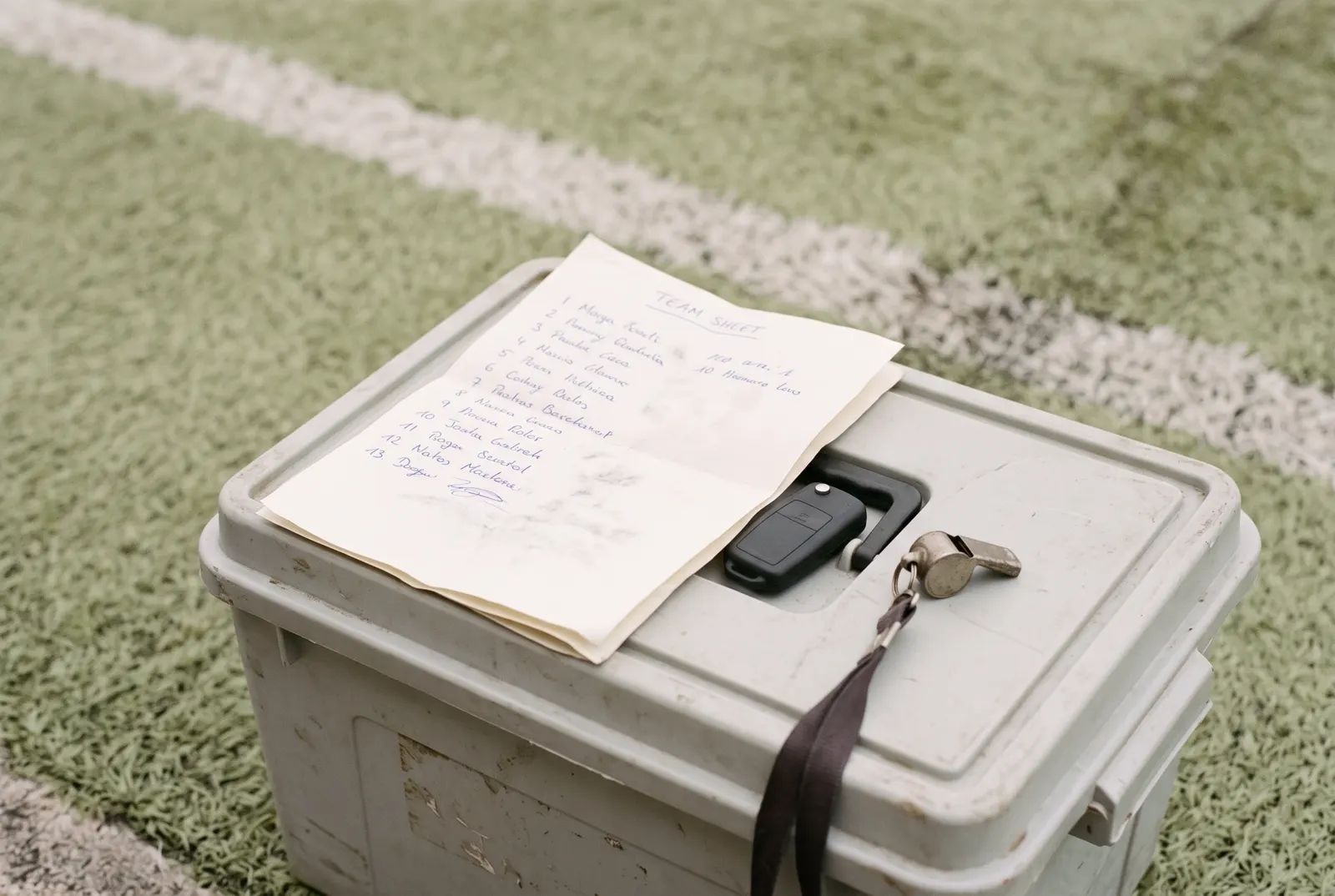
The call-up is the most visible decision a youth coach makes every week. Training, tactics and the work behind the scenes stay behind closed doors; Saturday’s list is public, and it is read by twenty players and forty parents.
And yet, in most age groups, it gets closed like this: Friday night, on the sofa, scrolling back through the WhatsApp group trying to remember who missed Wednesday’s session.
The problem is remembering, not choosing
The choice itself is the easy part: any coach knows who is working well. What breaks down is the administrative memory. Who handed in the medical? Who is grounded by school? Who said they were going to their grandmother’s birthday? That information exists, but it is scattered across conversations, bits of paper and your head.
The method that follows does not decide for you. It only makes sure that, on Friday, you have everything in front of you.
Monday: the state of the squad
After the week’s first session, five minutes: who trained, who was missing, who complained about something. It is not about punishing absences. It is so that at the end of the week the conversation is about facts and not impressions.
Wednesday: the shortlist
By midweek you already know almost everything: confirmed injuries, absences you were told about, suspensions. Make the shortlist with two more than you will take. Do not publish it. It is yours. It exists so you can see what is still open and chase whoever has not answered.
Friday: close it and say it
With Monday’s and Wednesday’s work done, closing is crossing out two names. Communication is where most of the drama is born, and the rule is one: whoever is left out hears first, and hears why. A direct two-line message avoids ninety per cent of Saturday’s difficult conversations.
The public list goes out afterwards, always in the same format and in the same place: meeting time, venue, kit, and the names in alphabetical order. Alphabetical, not by importance: in youth football the list is not a pecking order.
What is left at the end of the season
If this record lives in a notebook, it dies in June. If it lives in a system, at the end of the season you have the full picture: how many call-ups each player had, who never missed a session, who was always available. That is what end-of-season conversations are made of, and next season’s decisions too.